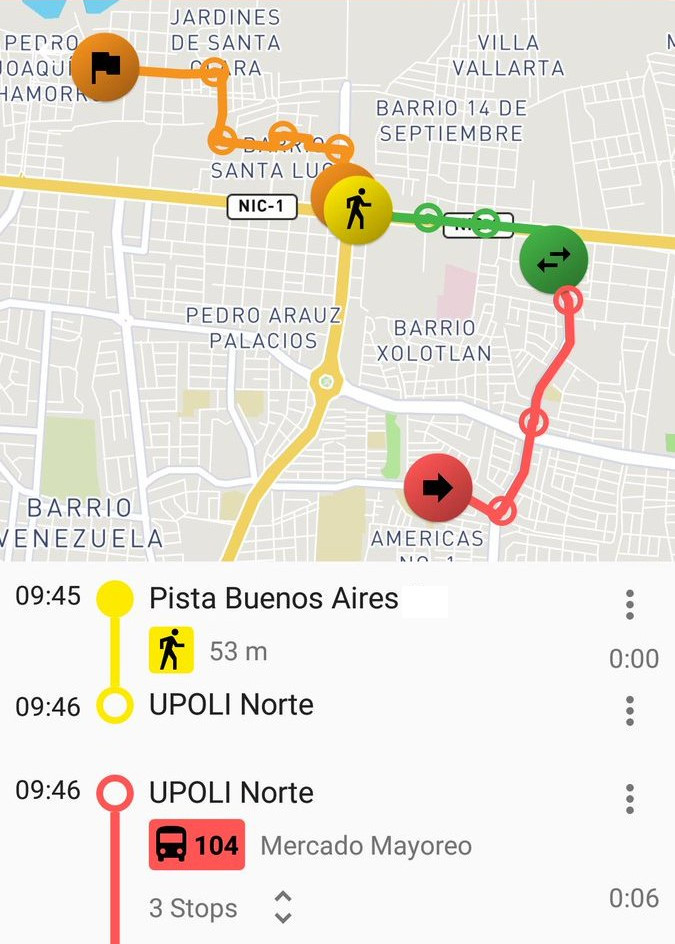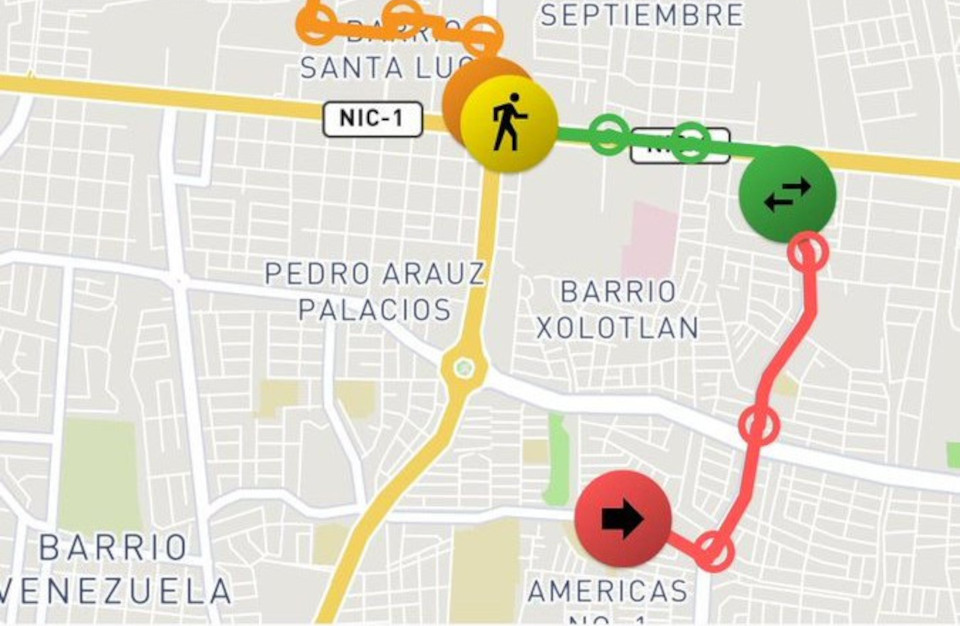
After the Nicaraguan OpenStreetMap community crowd-sourced the data of their capital’s public transportation system in OpenStreetMap with over 250 interested citizens, a schematic paper map was created from this data.
In a next step, the community wanted to offer state-of-the-art routing applications to visitors and inhabitants of Managua. For this, the data from OpenStreetMap was combined with crowd-sourced schedule information using the software tool osm2gtfs. The result is the common format for public transport data — GTFS — which could then be included in existing applications where the data is now available:
Managua is available in the following mobile applications
Transportr: Public transport route planner for Android. Because of its convenience and its characteristic of being Free Software, it is the best option for users of public transport.
TransitApp: Travel assistant and route planner. Application for Android and iOS that tells you how to move around the city using public transport or by bicycle. The application uses the data of the users to estimate the positions of the routes in real time.
Download the apps and try them yourself!
How it was done:
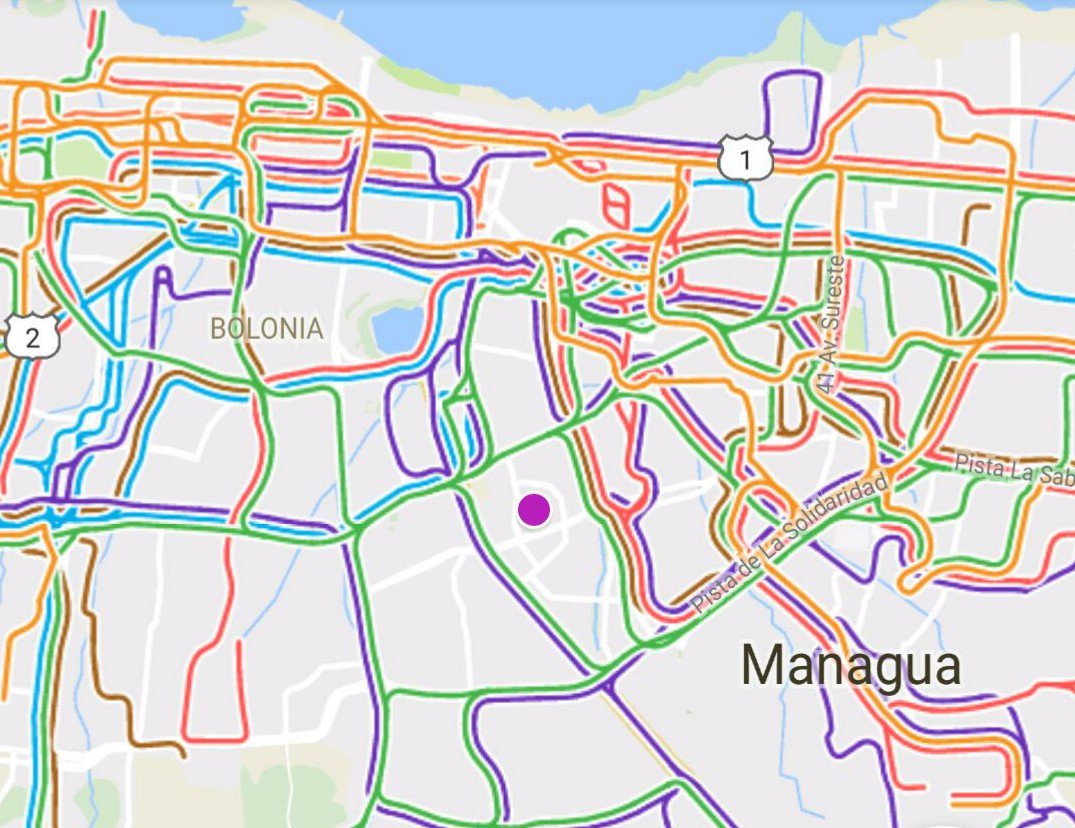 First of all, the whole effort has been grounded on the collaboration of many actors, from hundreds of curious and active citizens and students gathering the data, members of the Nicaraguan Free Software communities, who provided high-level technical work, a group of international initiatives that collaborated on programming the missing software to make this pioneer work happen, donors through our crowdfunding campaign, organizations like the Humanitarian OpenStreetMap Team, which collaborated in communication and provided a legal base for the handling of funds, and last but not least, the partnerships with companies that included the data in their products to offer a reliable solution to a larger group of consumers. But let’s go into a bit more detail:
First, we created a GTFS with osm2gtfs. The GTFS is published by the Nicaraguan OpenStreetMap community.
Then, we partnered up with the following initiatives and companies to include the data in different services:
- Published on transit.land - the most relevant library of open GTFS data.
- Integrated into the online routing service Navitia, hosting kindly provided by Kisio Digital.
- Included the Navitia endpoint in the public-transport-enabler, through a respective pull request to make it available in Transportr.
- Direct integration into the commercial application TransitApp, through the company behind the software.
Thanks to everybody involved in making this happen!