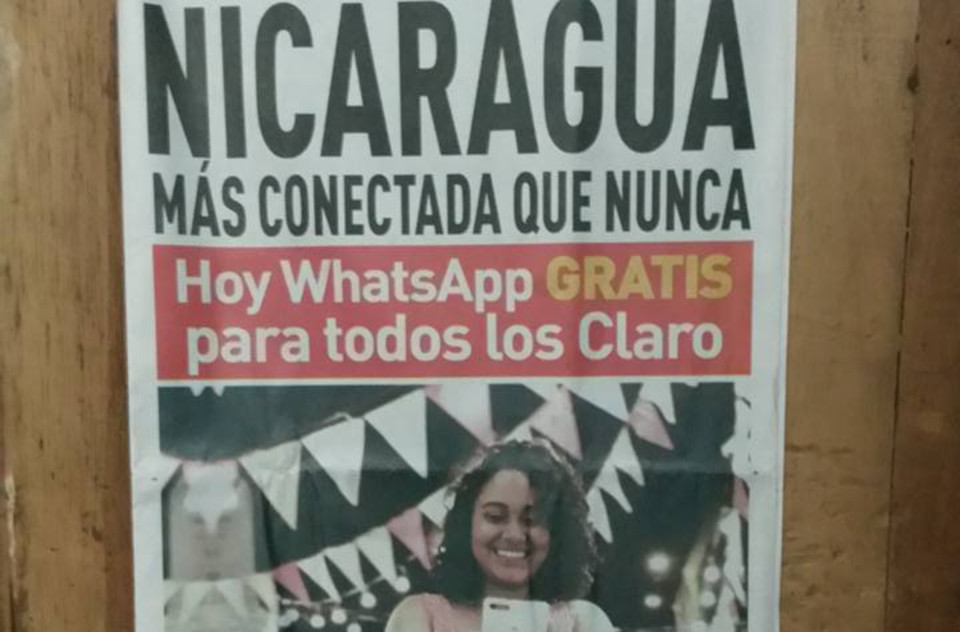
 The base of a free Internet, where all information packages are treated
equally without any discrimination is in danger. In Nicaragua, these
developments already lead to an internet of three classes, where the
poorest have least opportunities. And very remarkably, the people fall
blindly into the shiny lies of the telecommunication industry.
The base of a free Internet, where all information packages are treated
equally without any discrimination is in danger. In Nicaragua, these
developments already lead to an internet of three classes, where the
poorest have least opportunities. And very remarkably, the people fall
blindly into the shiny lies of the telecommunication industry.
Some weeks ago, “La Prensa” and “El Nuevo Diario”, the two largest national newspapers, gave the biggest internet provider even the entire front page, with the title “Nicaragua, more connected than ever”. The reality is, despite of being the country with least connectivity in Latin America, Nicaragua also has one of the unfairest Internets in the world: There are three different classes of internet, which provide very unequal opportunities to the population:
The first group of internet users is very small, the elite, which has a regular internet connection at home. Depending on the source, this indicates to be 3.4% (TELCOR) to 15.5% (Internet World Stats) of the population. These people can use all kind of internet services, use it for work and their own entertainment and, most important, for their personal growth.
The second group is much bigger (very difficult to measure, I would roughly estimate around 30% of the population) and has partly access to internet only. They can access the internet at their workplace, go to cyber cafés to use internet on an hourly base or connect to the publicly available wifi internet in the central parks of Nicaragua’s major cities. They use internet for communication and specific investigations for their work, university or school labours. But the use of the internet for their personal benefit is always happening under limiting pressure.
And then there are, as common as the group before, the ones, who are most discriminated and limited internet users - the poorest people with the least educational level. They get an internet cut into pieces. A lot of, so called, “offers”, are mostly prepaid packages to use certain services like Facebook, WhatsApp on daily charges on mobile phones.
These people are far from being sovereign users of the internet. Their interaction is limited to certain services and their communication is always monitored. Most of the positive effects the internet offers the first group — the freedom to inform themselves, the opportunity for self-directed learning, and fair and equal access — cannot be expected when only using a tiny fraction of the internet.
The internet as we know it, is becoming sold in pieces which are charged differently. This is a great business for the telecommunication providers, but a clear and unnecessary limitation for the consumers and, as it can be observed in Nicaragua, directly related to wealth and opportunities.
Instead of falling for misleading promises — as La Prensa and El Nuevo Diario did with their front-page headlines — we, all over the world, must demand the same principles for technology that we expect in regular life. Free speech and equal opportunities without discrimination are foundational to our modern societies. We define liberty by the freedom to move wherever we wish, and this must equally be guaranteed for our communication and access to information.
- Seventh article in my column "Brave new digital world" (Un mundo digital feliz) in the newspaper Confidencial.com.ni, where it has been published in Spanish language.
- Special thanks to Cinthia Membreño