 A life without mobile phones is almost impossible to imagine. People’s
everyday lives are deeply influenced by these small communication
devices — even more so in countries where vast distances have to be
covered and economic conditions would not be sufficient to build landlines.
Even in the most remote areas of our planet, people rely on mobile phones
to communicate.
A life without mobile phones is almost impossible to imagine. People’s
everyday lives are deeply influenced by these small communication
devices — even more so in countries where vast distances have to be
covered and economic conditions would not be sufficient to build landlines.
Even in the most remote areas of our planet, people rely on mobile phones
to communicate.
The enormous benefits of using phones are usually the only side we see. But it is sobering to understand what negative implications mobile phones have for everyone’s privacy. It is indeed “a spy-master’s dream”, as investigative journalist Julia Angwin explains in a BBC documentary — one to which many scientists, engineers and programmers, without really realising it, have volunteered to develop “the world’s best tracking device”.
The governments
All global voice telecommunications are generally based on the Signalling System #7 (SS7), a set of technical protocols that allow phones to connect to each other. It is the vast network to which all telecommunications providers have access. When it was built, no security was implemented. There were only a few telecommunications providers, and they were either state-controlled or very large corporations. But today anyone can be an operator, and therefore gaining access to SS7 is easy — especially for intelligence agencies or any other actor with a desire to spy.
SS7 includes the technical specifications that make mobile phones work (such as roaming and SMS). These can be used to locate almost any person on the planet. There are even shady commercial services offering to locate your loved ones — or perhaps a cheating partner. But it also means that almost everyone in the world can be tracked, and when travelling abroad and roaming, your location is by default constantly transmitted through the system. A second, widely used technique is the silent SMS: within SS7, silent messages can be sent to any mobile phone without any visible notification to the user, but they generate the information needed to locate a person. Police mainly use this to locate criminals. But Edward Snowden’s revelations about the National Security Agency (NSA) revealed that this single institution gathers around 5 billion records every day from SS7 worldwide. Against a total world population of 7 billion people, we can imagine the extent to which everyone is being tracked. This is only possible because the NSA is connected to almost all major server nodes of SS7. But the NSA is not alone: at national levels it is straightforward for law enforcement agencies or oppressive regimes to access at least all information passing through the telecommunications providers in their jurisdiction.
But it is not only location data and communication metadata that are being observed — phone calls worldwide can also be easily intercepted by these powerful actors. We effectively all carry a microphone in our pockets, and there is no technical reason why it could not be used for surveillance and listening in at any time, even when no call is being made. The same obviously applies to built-in cameras.
Private companies
The telecommunications providers themselves can also use the data to gather information about their clients, and they do so all over the world: at minimum by retaining metadata about calls and messages well beyond what is needed to guarantee their service. Unofficial information from employees of Movistar and Claro, both mobile providers in Nicaragua, suggests that these two companies don’t even delete the content of SMS messages, but store them indefinitely.
Smartphones in particular — mostly connected to the internet — are targets for much more extensive information gathering by many different, mostly private, parties. Providers of built-in operating systems (such as Apple with iOS, Microsoft with Windows Phone and Google with Android) constantly collect information about users, their contacts, phone calls, applications used and geographic position. But developers of apps and programmes also take far more information from users than users would expect. To give one example: messaging applications like WhatsApp upload the user’s address book. This enables them to maintain a comprehensive worldwide phone directory — and even if someone chooses not to use WhatsApp for this very reason, their friends do, and so they end up included in the directory anyway.
Brave new world
We have built a system that allows tracking almost any person on this planet and we have not incorporated any suitable mechanism of control. We now know that all this is very out of control, but we are far away from being able to do anything about it.
- This article has been published in Spanish language in my column: “Brave new digital world” (Un mundo digital feliz) in the newspaper Confidencial.com.ni
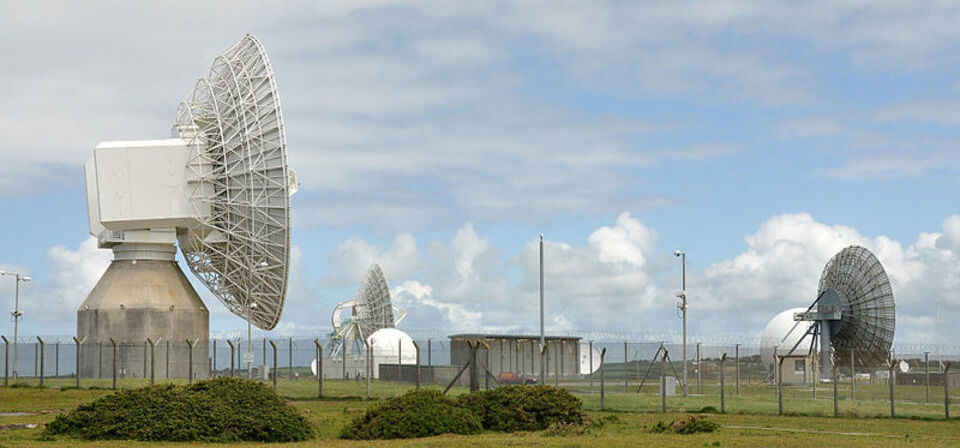
- Photo by Nilfanion
- Special thanks to Cinthia Membreño